Curling Club: PvP Multiplayer
- 4.5
- Rating
- 100.00K
- Installs
- Free
- Price

 Analysis by App-foxy
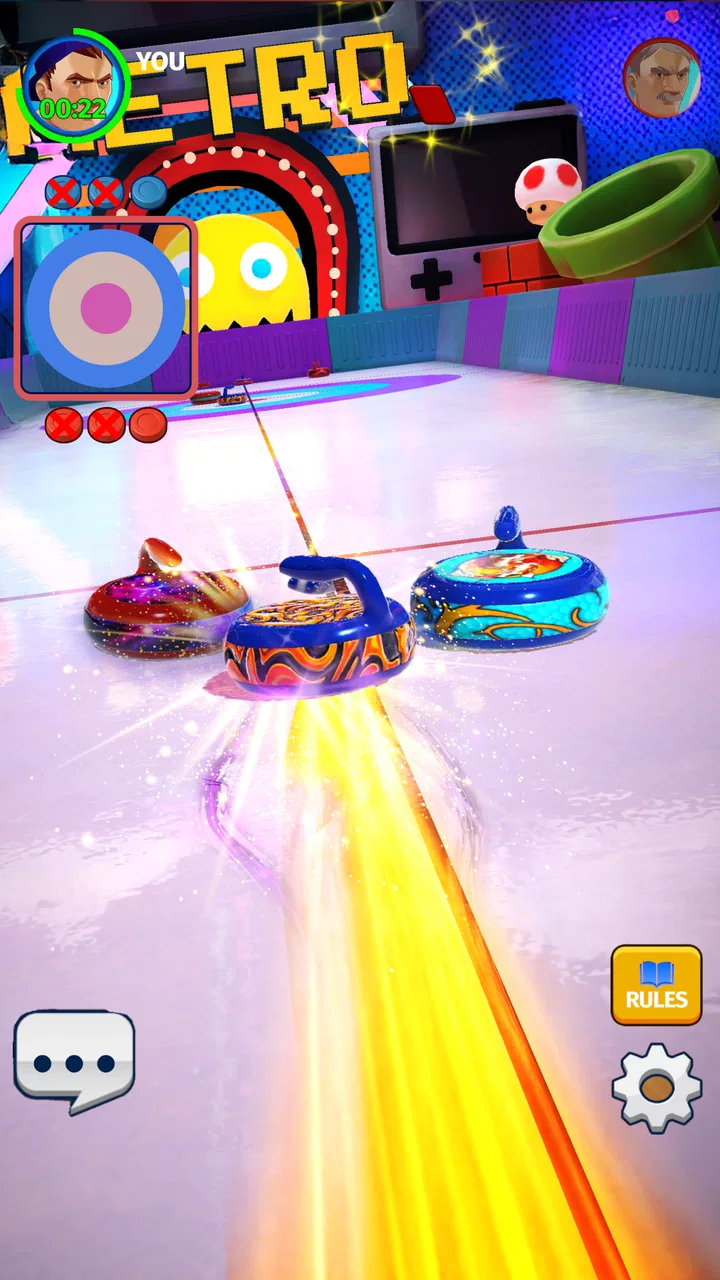
I approached Curling Club: PvP Multiplayer expecting a simple sports game built around sliding stones, but its appeal became clearer after a few matches. The game turns curling into a compact online contest: I choose a line, release a stone, watch it travel, and then deal with the score that follows. That sequence sounds straightforward, yet the tension comes from how much can change after one imperfect attempt. A shot that looks safe can leave an opening, while a modest placement can become the move that protects a lead.
That makes this a useful choice for players who enjoy sports games without wanting a long career mode or a complicated control system. It is a free game from BoomLand FZ-LLC, listed in the Sports category, with an Everyone content rating. The current version is 1.0.0, and it runs on Android 7.0 or later. I also like that the basic idea is immediately understandable: this is about reading the ice, sending stones toward the target, scoring, and trying to outplay another person online.
The most important thing to understand before installing it is that the fun is not in frantic tapping. The satisfying part is making a decision, seeing whether the stone follows the intended path, and adjusting the next decision based on the result. The core loop is short, readable, and built around the consequences of one shot. If you prefer sports games with constant movement, detailed team management, or a large amount of content outside matches, this may feel deliberately narrow. If you enjoy compact competitive sessions, it has a much stronger case.
You May Also Like

 Blood Strike: 2.5 Anniversary
Blood Strike’s Loadouts Turn Every Drop Into a Tactical Gamble
A close look at Blood Strike’s custom loadouts: how fast access to signature weapons reshapes its battle royale rhythm, rewards preparation, and narrows the gap between fights.

 Pandora - Music & Podcasts
Pandora’s Music Is Easy to Start, but Harder to Recover
Pandora’s strength is its low-effort path from a seed to a station. Its weak spot is how much confidence it asks you to place in connection, setup, and quiet recovery.

 8 Ball Pool
 Is Built on Rivalries, Rematches, and Routine
A close look at the rivalries, rematches, shared routines, and unanswered safety questions that turn a quick pool match into a persistent mobile community.

 Samsung Music
’s Quiet Strength Is Playing What You Already Own
Its reach comes less from spectacle than from dependable access to a personal library. That simplicity is both the app’s strongest retention engine and its ceiling.

 AccuWeather: Weather Radar
AccuWeather Review: A Quick, Clear Forecast for Everyday Decisions
For everyday plans, the best forecast is the one you can understand quickly. AccuWeather makes rain timing, radar, and local conditions easy to act on, with a few trade-offs.

 Hill Climb Racing
Why Hill Climb Racing Still Turns Crashes Into One More Run
A tiny car, a bumpy hill and one more upgrade: Hill Climb Racing keeps resurfacing because its simple chaos makes every near-miss feel personal.
More From Our News Desk



How the first shot sets the tone
I like how the first shot gives a match its direction without making the opening feel like a test I have to pass. It also gives me a useful moment to check whether I understand the aim and release before the board gets crowded. From there, the more interesting question is how the game makes each result clear enough to guide my next choice.
Action that feels easy to begin
The first action is naturally inviting because curling has a clear physical goal. I am not trying to memorize a large move set or manage several players at once. I am trying to send a stone toward a scoring area and place it more intelligently than the opponent. That focus makes the game approachable even if I have never spent much time with curling before.
In practice, the opening decision is less about speed than intention. I have to think about where I want the stone to finish, how much room I am leaving for later shots, and whether a direct scoring attempt is wiser than a defensive placement. That gives the first release more meaning than a basic “aim and fire” interaction. Even when the control idea is simple, the result can shape the rest of the end.
This is also where the game differs from many casual sports titles. A football or basketball game usually asks me to react to changing positions, while this game gives me a moment to commit to a plan. The pressure comes from making that plan with incomplete certainty. I cannot simply correct the stone once it is moving, so the initial action has a clean risk-and-reward quality.
Why the controls need patience
The low barrier to entry does not mean every shot feels precise immediately. Curling depends on small differences in direction and strength, and a mobile screen can make those differences feel more important than they first appear. My early attempts were more useful as lessons than as victories because they showed how a slightly poor release can alter the whole position.
I found it helpful to treat the first few matches as calibration rather than proof of skill. Instead of chasing a perfect opening shot, I paid attention to how the stone reacted to my input and how much space remained around the target. This is one of the game’s less obvious strengths: it encourages observation. A player who watches the result carefully can improve without needing a long tutorial or a separate practice routine.
There is a trade-off here. Players who want instant, arcade-like feedback may find the measured pace less exciting. The game asks me to accept a brief period of learning before every release feels deliberate. That patience pays off when a planned stone settles into a useful position, but it can also make the first sessions feel less rewarding for anyone expecting immediate mastery.
Choosing a shot instead of repeating one
A useful way to approach a match is to divide shots into three purposes: scoring, blocking, and disruption. A scoring shot aims to occupy the valuable area. A blocking shot makes a direct route harder for the opponent. A disruption shot tries to change stones already in play. I do not need to label these choices inside the game; thinking this way simply prevents every turn from becoming the same attempt at the center.
This decision-making is where the online PvP format earns its place. Against another player, a safe position can be more valuable than a flashy one, especially when the opponent has a clear path to respond. I began to notice that the best shot was often the one that reduced the opponent’s comfortable options rather than the one that looked most ambitious.
That is a concrete tip I would give a new player: before releasing, ask what the opponent can do if the stone lands exactly where you want. If the answer is “they can remove it easily,” the shot may not be as strong as it appears. If the stone also creates cover or blocks a route, its value improves even when it does not score immediately.
Feedback, scoring, and the rhythm of a match
For me, a satisfying shot matters most when I can tell what it changed: the score, the available routes, or the pressure on the next player. That kind of feedback makes the match feel like a series of connected decisions rather than isolated releases. The same rhythm also shapes how rewarding a win feels and whether I want to start over.
Every release creates a small story
The feedback rhythm is the reason I kept starting another match. I make a choice, release the stone, watch its path, and then read the new arrangement. The game does not need a complicated narrative because the board itself supplies one. A successful shot gives me a position to protect; a poor shot creates a problem I need to solve; an opponent’s clever response forces me to change plans.
That rhythm is especially effective in short sessions. I can understand what happened without studying a large results screen or reviewing a long sequence of events. The action is followed by a visible consequence, and that consequence informs the next decision. In a good exchange, the match feels like a conversation made of placements and responses rather than a series of disconnected turns.
The reset between shots is important too. A mistake does not automatically end the match. The board changes, but I still have a chance to recover by choosing a more practical line. This makes the game less punishing than sports titles where one missed input can lead to an immediate goal or knockout, while still preserving enough consequence to keep each release meaningful.
Scoring is more than chasing the target
The scoring system gives the action a clear destination, but I found that counting points alone is not enough to play well. A stone near the scoring area may be valuable because it earns points, because it forces a response, or because it occupies a useful position for the next exchange. The most interesting moments happen when those purposes overlap.
I also learned not to judge a shot too quickly. A stone that does not look like an immediate scoring success can still improve the position by narrowing the opponent’s options. Conversely, a stone that reaches a promising area may be vulnerable if it is left exposed. This is one of the game’s more rewarding lessons: the visible result and the strategic result are not always identical.
For everyday play, this makes the game fit well into small breaks. I can play a match while waiting for an appointment or taking a short pause, then stop after the result without feeling that I have abandoned a large campaign. The limitation is equally clear: players looking for an expansive sports simulation may find the match structure too focused. The appeal comes from repeating the decision cycle, not from unlocking a large world around it.
Online competition changes the pressure
Playing against another person gives each placement more personality than playing against a predictable routine. I have to consider that the opponent may notice the same opening I see, may choose a defensive answer, or may take a risk because they need to change the score. That uncertainty makes familiar situations feel different from one match to the next.
It also means that losses can feel less informative than they would in a purely solo game. Sometimes I understand exactly why a shot failed; other times the opponent simply found the better response. I recommend focusing on the decision rather than only on the final score. Did I leave a clear route? Did I protect the useful stone? Did I choose a risky shot when a safer one would have kept the position manageable? Those questions turn a defeat into something actionable.
Players should also be comfortable with the possibility that the quality of a match depends on the opponent. A thoughtful rival can make the game feel tense and tactical, while an uneven contest may reduce the satisfaction. That is not a flaw unique to this title, but it matters more here because human decisions are the main source of variety.
Rewards, resets, and the reason to play again
I see the reset as a chance to carry a lesson forward, not as progress being erased: I can enter another match with a clearer idea of what I want to try. That works best when I set a small aim for myself, such as protecting a useful position instead of chasing every possible point. It leaves one final question: who will enjoy that repeatable, focused loop most?
The reward is partly the improved decision
The immediate reward is the satisfaction of a well-placed stone or a successful response, but I found another reward in recognizing patterns. After several matches, I started spotting when I was creating an easy route for the opponent or leaving my own scoring position too exposed. That kind of improvement is subtle, yet it gives the game a reason to remain installed beyond the novelty of the first session.
Because the game is free, it is easy to try without making an upfront purchase. It includes in-app purchases ranging from $0.99 to $99.99 per item, so anyone who spends should decide in advance what level of optional spending feels comfortable. My advice is to judge the game first by whether the shot-and-response loop is enjoyable on its own. A purchase cannot fix a mismatch between the player’s preferred pace and the game’s deliberate style.
The reward structure works best for someone who enjoys incremental mastery. I would not describe it as a game I open only to collect a quick prize and leave. The stronger motivation is the thought that the next match may give me a cleaner chance to apply what I just learned. That is a healthier reason to replay than chasing a single lucky result.
Why the reset does not feel empty
When a match ends, the board state disappears and the next contest begins from a clean position. At first, that reset can seem like a loss of progress, especially for players who prefer persistent teams, long-term upgrades, or a campaign map. In this game, however, the reset is what keeps the focus on judgment. I am not carrying a damaged roster or a complicated inventory into the next attempt; I am carrying my understanding of what went wrong.
That makes the reset useful for short-form play. A poor match does not require a long recovery period. I can start again and test a different opening idea while the previous mistake is still fresh. The downside is that players who need a strong sense of permanent progression may find the loop less compelling over time. Compared with management-heavy sports games, this is a cleaner but less layered experience.
A practical routine is to give myself one specific goal per session: protect a scoring stone, avoid leaving an open route, or try a more conservative first placement. This keeps the reset from becoming mindless repetition. It also makes improvement easier to notice because I am evaluating one decision pattern instead of vaguely hoping to win.
Who should choose this over other sports games?
I would recommend it to someone who likes competitive board-game thinking but wants the atmosphere and motion of a sports title. It is also a good fit for a player who wants online PvP without learning a full squad, a long list of abilities, or a large control scheme. Curling’s natural stop-and-think structure makes it more accessible than many action-oriented sports games.
On the other hand, I would point a football fan toward a more traditional team game if they want constant movement and direct control over several players. A basketball fan looking for elaborate plays and fast reactions may also find the waiting period between decisions too calm. Likewise, someone who mainly enjoys career progression, customization, or a deep single-player campaign should look elsewhere. This game’s identity is the match itself, not the surrounding simulation.
It is worth remembering that the Everyone rating makes it suitable for a broad audience, but that does not mean every age group will enjoy the same thing. Younger players may appreciate the clear objective, while older competitive players may be more interested in the tactical consequences of each placement. The best audience is anyone who enjoys learning through repeated attempts rather than demanding immediate spectacle.
My verdict on the complete loop
The loop is easy to describe: choose a line, release a stone, read the feedback, respond to the new position, receive the satisfaction of a better result, and reset for another contest. What makes it work is the connection between those stages. The action is simple, the feedback is visible, the reward is both the score and the lesson, and the reset gives me a clean opportunity to use that lesson.
There are clear limits. The focused format may feel thin beside larger sports games, and the measured pace will not suit players who want nonstop action. Online competition can also vary depending on the opponent, which means not every match will produce the same level of tension. The in-app purchase range is another reason to keep spending deliberate rather than treating every optional item as necessary.
Still, I think Curling Club: PvP Multiplayer succeeds when approached on its own terms. It is not trying to replace a complete sports simulation. It is a compact competitive game about placement, patience, and reacting intelligently to a changing board. Its average rating is 4.5 from around 6.6 thousand ratings, and it has passed 100 thousand installs, which fits my impression that the simple premise has found an audience.
For me, the strongest reason to recommend it is the moment after a shot lands: I can immediately see what improved, what became dangerous, and what the opponent might try next. That clarity makes another session feel justified rather than automatic. If you want a free curling game that turns each release into a small tactical decision, this is worth trying. If you need speed, extensive progression, or a broad collection of sports modes, I would choose a different kind of game instead.
FAQs for Curling Club: PvP Multiplayer
01What is Curling Club: PvP Multiplayer all about?
Curling Club: PvP Multiplayer is a mobile game that simulates the sport of curling with a focus on player-versus-player (PvP) matches. Players can compete against others in real-time, strategize their moves, and aim to win matches by accurately sliding stones on the ice towards a target. The game offers various modes and challenges to enhance the curling experience.
02How do I control the stones in Curling Club: PvP Multiplayer?
In Curling Club: PvP Multiplayer, players control their stones by swiping on the screen to adjust the direction and speed. The game’s intuitive controls allow you to plan your moves strategically, considering factors like force and angle. Additionally, you can use sweeping mechanics to influence the stone's path and distance, adding depth to the gameplay.
03Are there any in-app purchases in Curling Club: PvP Multiplayer?
Yes, Curling Club: PvP Multiplayer offers in-app purchases. These can include cosmetic items, power-ups, and other enhancements that can improve your gameplay experience. While the game can be enjoyed without spending money, these purchases can provide advantages or customization options for those interested in personalizing their experience.
04What modes are available in Curling Club: PvP Multiplayer?
Curling Club: PvP Multiplayer features several modes to cater to different playstyles. You can engage in quick matches, participate in tournaments, or challenge friends in PvP battles. Each mode offers unique challenges and rewards, allowing players to improve their skills and climb the leaderboards while enjoying a variety of competitive environments.
05Can I play Curling Club: PvP Multiplayer offline?
Curling Club: PvP Multiplayer primarily focuses on online multiplayer experiences, which require an internet connection. However, there may be single-player modes or practice areas that are accessible offline, where you can hone your skills or try out strategies before taking on other players in online matches.
Pros
- Engaging multiplayer experience
- Smooth and responsive controls
- Vibrant and detailed graphics
- Regular updates with new features
- Easy matchmaking system
Cons
- Requires constant internet connection
- Limited single-player content
- Occasional in-app purchase prompts
- Can drain battery quickly
- Learning curve for beginners

Curling Club: PvP Multiplayer
Gallery